The Evidence Behind Vivio: Peer-Reviewed Research on Non-Invasive LVEDP Detection
Today, earlier diagnosis of heart failure is possible by simply and accurately detecting elevated left ventricular end-diastolic pressure (LVEDP) non-invasively. The Vivio® System was developed to bring that same physiologic signal detection capability into the primary care or home healthcare setting, non-invasively and in under five minutes.
The evidence base below spans peer-reviewed validation studies, multicenter practical trials, and independent clinical recognition — demonstrating not only that Vivio’s non-invasive approach correlates with invasive LVEDP measurement, but that it performs reliably at scale, in real-world primary care and population-health settings.
Diagnostic Accuracy

JAHA Multicenter Validation Study
Journal of the American Heart Association, 2025
A multicenter study validated a novel non-invasive brachial cuff-ECG system against elevated left ventricular end-diastolic pressure (LVEDP) — the physiologic marker long considered the reference standard for diagnosing heart failure, but historically obtainable only through invasive catheterization. The study demonstrates that filling pressure can be identified accurately outside the cath lab, at the point of care.
Sample size/setting: 728 enrolled patients (417 included in the final analysis), 8 study sites across the United States

Multicenter Validation: Vivio System for Non-Invasive LVEDP Detection
Circulation, 2023
A pivotal study establishing validation of the non-invasive brachial cuff-ECG approach for estimating elevated LVEDP. Because invasive LVEDP measurement requires an in-hospital procedure, accessibility has long limited its use in outpatient diagnosis — this study is foundational evidence that a non-invasive alternative can close that gap.
Sample size/setting: 728 patients referred for coronary angiography and left heart catheterization, plus 321 control patients with no significant health problems; 7 medical centers in the USA
Clinical Utility
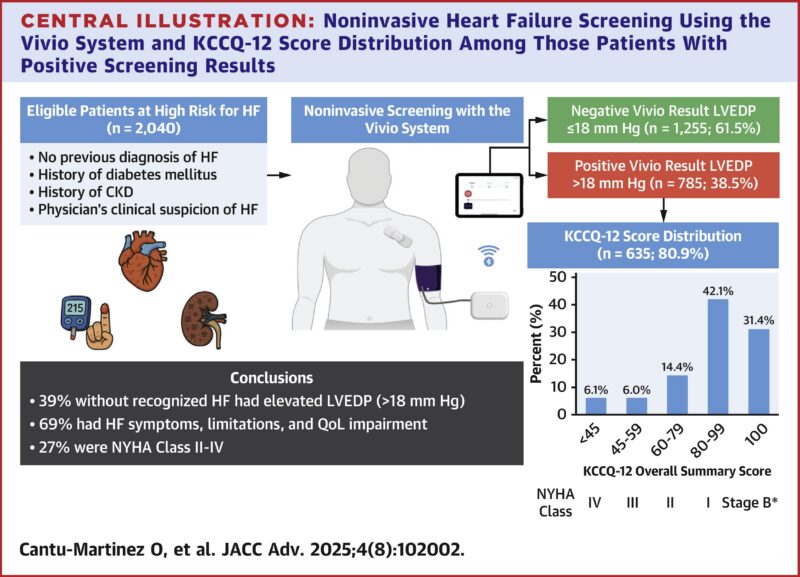
Noninvasive Screening for Elevated LVEDP and Health Status in Outpatients at Risk for Heart Failure
JACC: Advances, 2025
In a primary care screening study of high-risk outpatients, nearly 40% were found to have elevated LVEDP — many with no prior heart failure diagnosis. The results show how a non-invasive physiologic measurement can be built into routine primary care workflows to surface hidden cardiac risk and support earlier referral, monitoring, and treatment decisions.
Sample size/setting: 1,238 high-risk patients, 25 primary care sites; 92.2% conclusive result rate; 40.1% elevated LVEDP
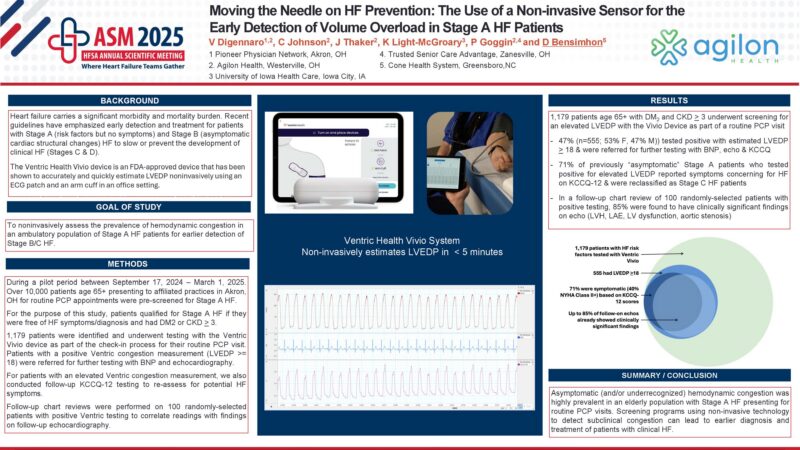
HFSA Prevention Abstract
Heart Failure Society of America, 2025
Presented at HFSA, this analysis found that non-invasive sensing can detect early volume overload in Stage A patients — before symptoms develop. The findings support prevention-focused care models built around identifying physiologic risk earlier, with direct relevance to value-based care organizations aiming to intervene before costly downstream deterioration.
Sample size/setting: 1,179 high-risk patients (age 65+ with Stage A HF), affiliated primary care practices in Akron, OH; 47% elevated LVEDP (≥ 18).
Scalability & Real-World Operations
Vivio System Demonstrates High Scalability and Operational Feasibility for Population-Level Heart Failure Screening
Physiological Measurement, 2026
This multicenter study evaluated the Vivio System’s performance within a dedicated, high-throughput “heart health clinic” model, finding it scalable and operationally feasible for population-level screening. The paper speaks to a different question than the accuracy studies above: not just whether Vivio detects elevated LVEDP correctly, but whether it can be deployed efficiently across large at-risk populations.
Sample size/setting: 1,238 high-risk patients across 25 primary care sites; 92.2% conclusive result rate; 40.1% elevated LVEDP.
Independent Recognition
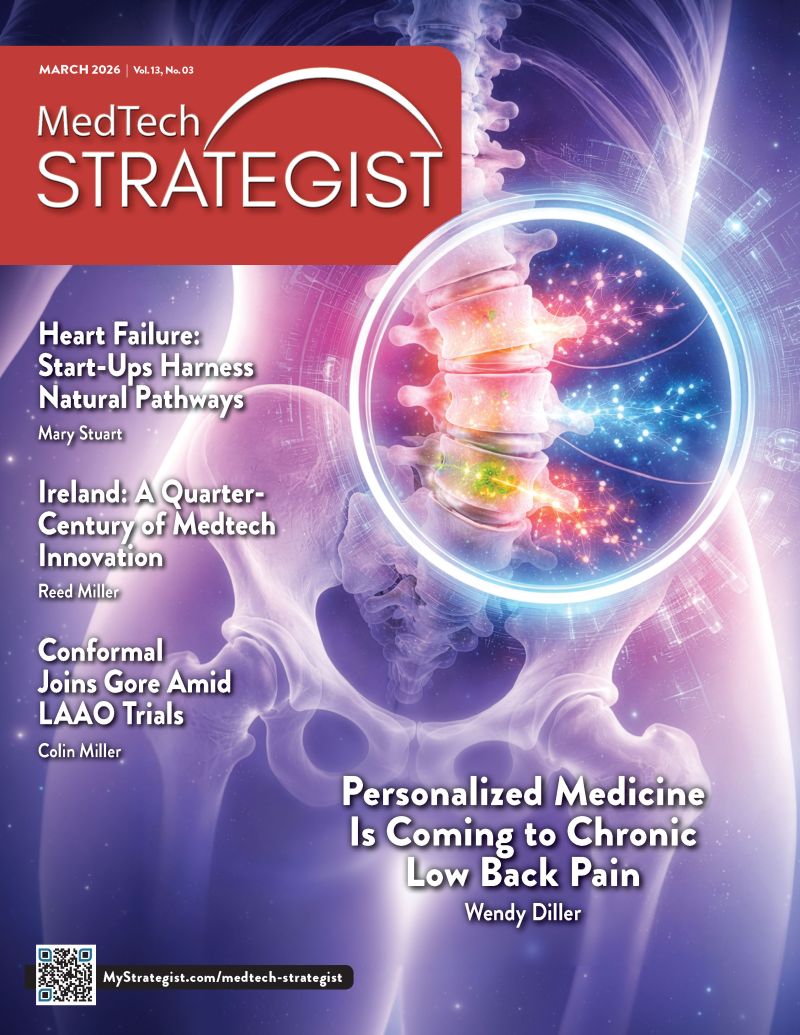
Innovating Heart Failure: Start-Ups Harness Natural Pathways
MedTech Strategist, March 2026
An independent trade-press feature examining next-generation heart failure companies tackling the disease as a systemic condition. Ventric Health is highlighted for its FDA-cleared Vivio device, which brings non-invasive early detection into primary care — identifying elevated filling pressure in both HFrEF and HFpEF patients before symptoms fully emerge.
Diagnostic performance: 0.80 sensitivity and 0.83 specificity; 38.5% elevated LVEDP detection rate in at-risk groups; >33% of positive cases identified while still asymptomatic.

Ventric Health Recognized for Advancing Non-Invasive Heart Diagnostics
Fierce Innovation Awards, Healthcare Edition 2023
Ventric Health’s Vivio System earned the title of Best Digital/Mobile Health Solution at the 2023 Fierce Healthcare Innovation Awards. The award highlights the system’s innovative approach to tackling delayed heart failure diagnoses, a critical issue that affects up to half of patients and often leads to delayed treatments and increased healthcare costs. The Vivio System is a highly portable, non-invasive device that can accurately detect elevated left ventricular end-diastolic pressure (LVEDP)—a key indicator of heart failure—in under five minutes. By allowing clinicians to perform this essential diagnostic check quickly in almost any care setting, the recently FDA-cleared technology aims to make early detection more accessible, ultimately improving outcomes for at-risk populations.
Transforming Heart Failure Care: A Journey to Better Outcomes
Explore our comprehensive resources to understand the critical aspects of heart failure, from its progression and treatment to the cutting-edge technology changing how it is diagnosed. By navigating these pages, you will learn how earlier detection leads to better patient outcomes and discover the specific healthcare providers and organizations we partner with to transform cardiovascular care.