Earlier Heart Failure Detection
Earlier diagnosis. Better outcomes. Lower cost.
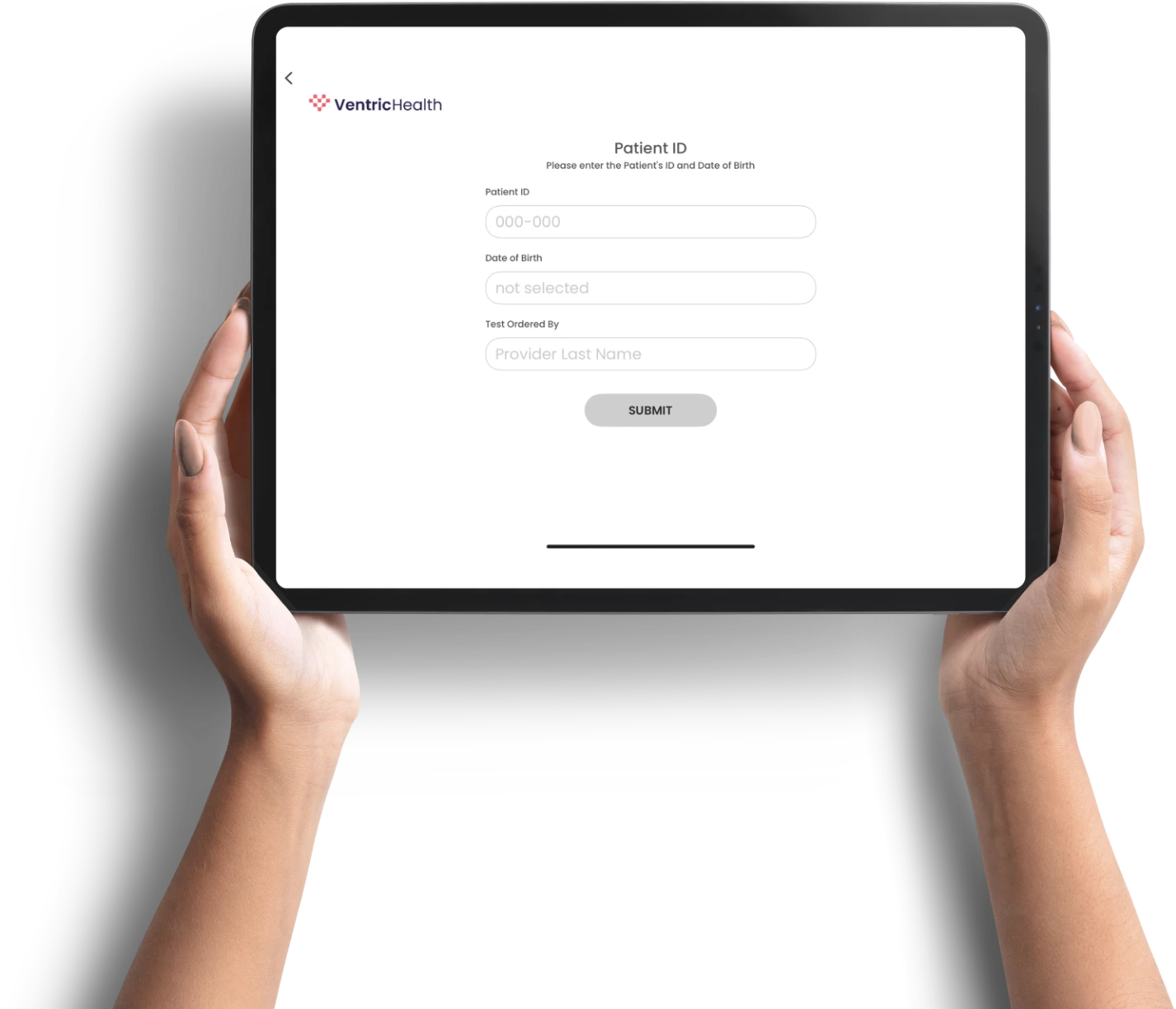
Heart failure affects approximately 6.7 million Americans over 20 years of age.¹ Yet most patients are first diagnosed in the emergency room, after the disease has already advanced.2,3 The Vivio® System brings the first and only non-invasive hemodynamic measurement to primary care, closing the diagnostic gap before a crisis occurs. Heart failure is a progressive, degenerative condition in which the heart is unable to pump sufficient blood to meet the body’s needs. It affects nearly 1 in 4 Americans4 and is consistently among the leading causes of hospitalization, mortality, and long-term medical expenditure in the United States.
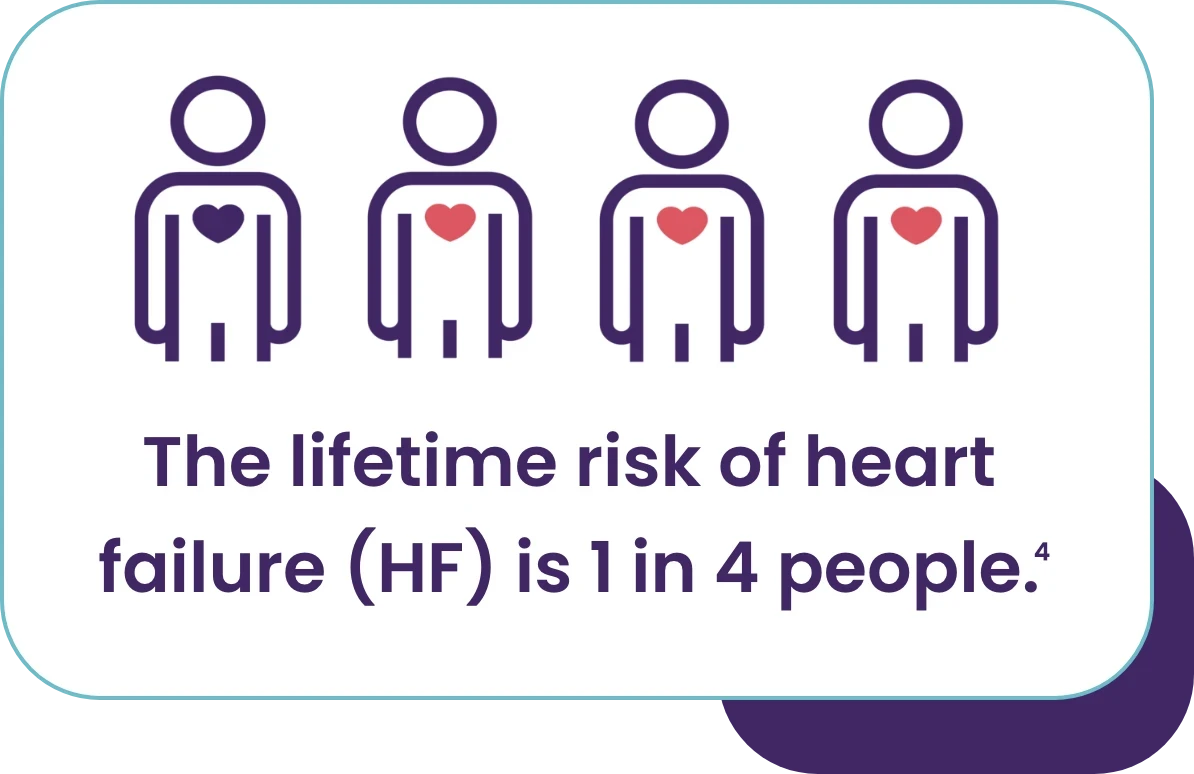
A Progressive, Degenerative Disease: Often Silent Until It’s Severe
Despite significant clinical advances, diagnostic gaps, particularly in the outpatient setting, continue to delay intervention and worsen patient outcomes. The earlier heart failure is identified, the earlier treatment can be initiated. And earlier treatment significantly reduces the impact on both patient quality of life and total medical cost.5
The Four Stages of Heart Failure
Where patients are and where Vivio® intervenes.
Heart failure progresses through four defined stages, each representing increasing cardiac dysfunction and clinical complexity.6 Understanding this progression is essential to appreciating why earlier detection matters, and why primary care is the right setting to act.
| Stage | Classification | Description | Vivio’s Role |
|---|---|---|---|
| Stage A | At Risk | Patients with existing conditions — diabetes, CKD, COPD, obesity, hypertension — who are at risk for structural heart changes but have no current abnormality. | These are the patients who need to be screened for HF using Vivio |
| Stage B | Asymptomatic Heart Failure | Structural or functional cardiac abnormalities present, including elevated LVEDP — but no patient reported signs or symptoms of heart failure yet. A critical intervention window to start GDMT. | Vivio detects elevated LVEDP at this stage — the earliest actionable opportunity |
| Stage C | Symptomatic Heart Failure | Signs and symptoms of heart failure caused by structural or functional cardiac abnormalities. GDMT should be initiated or optimized. | 70% of Vivio-positive high-risk patients are at Stage C or higher |
| Stage D | Advanced Heart Failure | Severe symptoms at rest that disrupt daily life or require repeated hospitalizations. Specialist management and advanced therapies required. | Earlier detection prevents progression to this stage |

Understanding left ventricular end-diastolic pressure (LVEDP).
LVEDP is the pressure measured inside the left ventricle at the precise moment when diastole concludes — maximum filling just before the heart muscle begins contraction. It is essentially a measure of “preload:” the stretch placed on the ventricle’s muscle fibers by the volume of blood it contains at the end of filling.7
Elevated LVEDP is recognized as the definition of heart failure by the American Heart Association, the European Society of Cardiology and the ICD-10 Coding Clinic Handbook.6,8,9

The Scale of the Problem
Most patients are diagnosed too late.
Heart failure is one of the most significant clinical and economic challenges in U.S. healthcare. Despite proven therapies and clear guidelines, the majority of patients are not identified until their disease demands emergency intervention, a pattern that is both clinically costly and largely preventable.
The Diagnostic Gap
Standard tools aren’t enough — especially for HFpEF.
Without a reliable way to measure filling pressure non-invasively in an office setting, primary care clinicians have been forced to rely on tests that routinely miss the patients most at risk. Definitive diagnosis has historically required invasive cardiac catheterization, a hospital-based procedure entirely unsuitable for routine screening.

Echocardiography:
Misses HFpEF in roughly one-third of confirmed cases. Scans can appear normal at rest despite active disease.14
BNP / NT-proBNP:
Ambulatory thresholds miss a substantial portion of HFpEF patients, creating false reassurance.15

Comorbidities:
Diabetes and CKD increase HF risk while masking early symptoms. The highest-risk patients are also the hardest to identify.16

The Result?
Diagnostic delays of up to 30 months — during which guideline-directed therapy could have been initiated and hospitalizations prevented.13
Clinical and Economic Outcomes
What earlier diagnosis actually delivers.
Shifting heart failure detection into the primary care setting, before an acute event, produces measurable improvements in survival, quality of life, and healthcare expenditure.17,18,19 These outcomes are supported by published literature and validated by real-world Vivio deployments across primary care organizations.
Vivio® changes how clinicians act and how patients fare.
Greater than 6× return on investment within 12 months.
Health systems and group practices adopting Vivio report strong financial returns, driven by earlier and more accurate diagnosis, reduced emergency and inpatient utilization, improved chronic disease management and RAF coding capture.5
The Vivio System is billed on a per conclusive test basis with all equipment, training and support included.
Request a one-on-one consultation today.

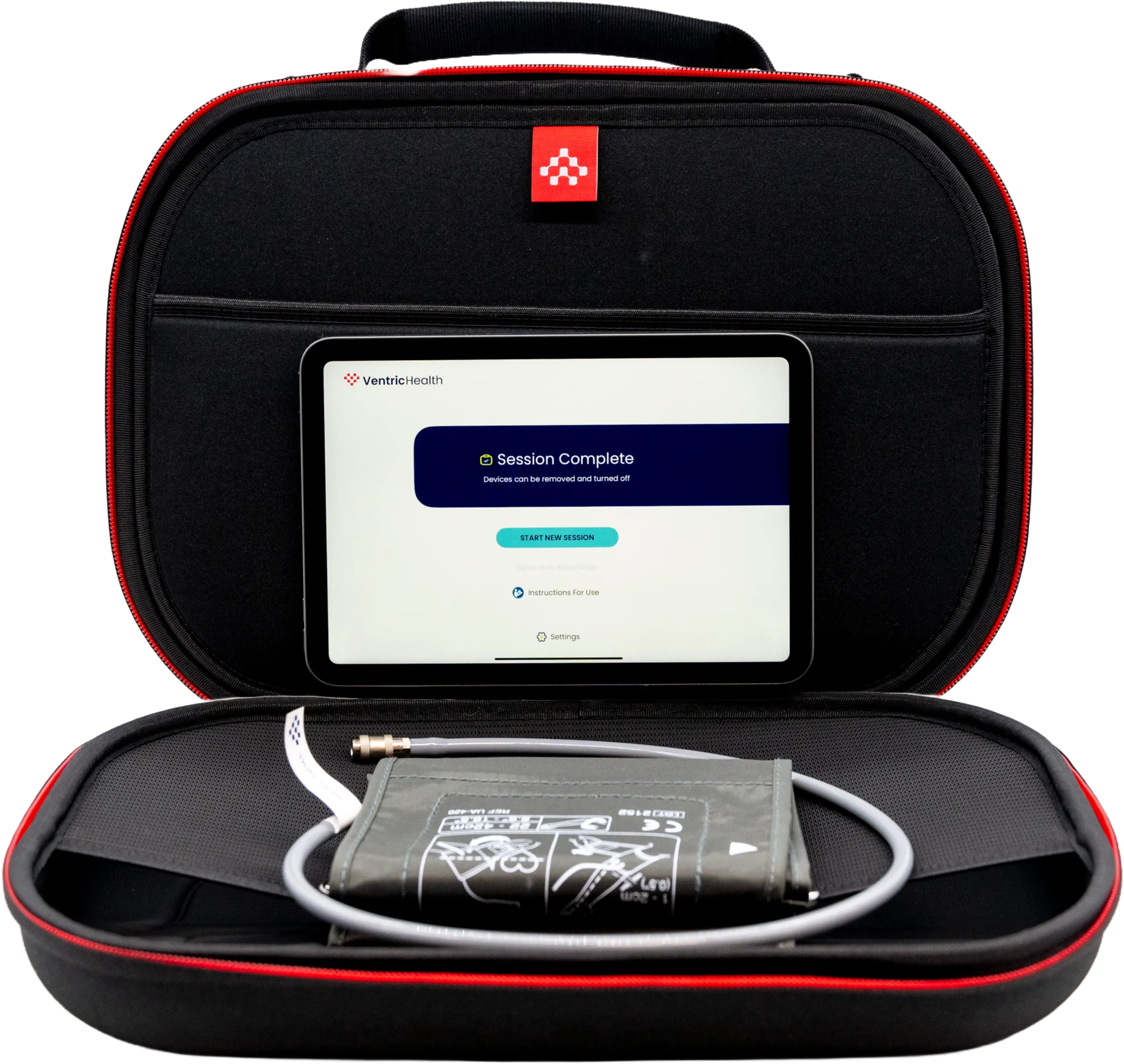
The Vivio® System
Non-invasive. Point-of-care.
Gold-standard accuracy.
The Vivio System is the first FDA-cleared, non-invasive solution for definitively measuring elevated left ventricular end-diastolic pressure (LVEDP), the clinical hallmark of heart failure.
What previously required a catheterization lab now takes less than five minutes in the exam room.
Peer-Reviewed Evidence
Validated in the literature.
Vivio’s clinical validity is established by two landmark peer-reviewed studies and recognized by leading clinical media.