Ventric Health Resources Hub
Your destination for evidence-driven heart failure decision support.
Our resources hub is designed to help you make informed decisions with evidence organized around real-world impact. You’ll discover peer-reviewed research, clinical validation, workflow insights and economic evidence around the questions decision-makers face.
Filter by topic or content type to quickly find the information most relevant to your role, setting and priorities. For additional information about the Vivio System, browse our FAQs.

AHA Multicenter Validation Study (2025)
Screening patients for elevated LVEDP using a novel noninvasive brachial cuff-ECG system validated a scalable method for detecting a key physiologic marker of heart failure often missed in routine care. The study shows filling pressures can be identified accurately at the point of care, supporting earlier intervention and reducing diagnostic delay across primary and community settings.

HFSA Prevention Abstract (2025)
Presented at HFSA, this analysis shows non-invasive sensing can detect early volume overload in Stage A patients before symptoms develop. The findings support prevention-focused care models that identify physiologic risk sooner. For value-based care leaders, the evidence reinforces opportunities to intervene earlier and reduce downstream clinical deterioration and cost burden.

Study Compares Vivio to Invasive Implant for Heart Failure Care
Ventric Health is enrolling 500 patients in a study comparing its non-invasive Vivio System to the invasive CardioMEMS implant for monitoring heart failure status. The Vivio System measures left ventricular filling pressure in five minutes, while CardioMEMS requires a surgical implant. If successful, Vivio could eliminate invasive procedures while matching clinical outcomes at lower cost and risk.
Study Shows Vivio Enables HF Detection & Triage in Primary Care
A new study in JACC: Advances shows Ventric Health's Vivio System, combined with the KCCQ-12 questionnaire, accurately identified undiagnosed heart failure in primary care patients. The FDA-cleared device non-invasively measures left ventricular filling pressure in five minutes with no hospital visit required. Among 2,040 high-risk patients screened, nearly 25% showed significant HF symptoms, enabling earlier intervention.
Noninvasive Assessment to Catch Heart Failure Earlier
Heart failure frequently goes undetected until significant functional decline has occurred. A new JACC: Advances study evaluating the FDA-cleared Vivio System—a noninvasive estimator of LVEDP—screened over 2,000 high-risk primary care patients. Nearly 40% demonstrated elevated LVEDP, with most reporting symptomatic burden or impaired quality of life, yet none carried a prior diagnosis. Read more on implications for earlier HF identification in p…

JACC Noninvasive Screening for Elevated LVEDP Study
This primary-care screening study found nearly 40% of high-risk outpatients had elevated LVEDP detected non-invasively, many without a prior heart-failure diagnosis. The results demonstrate how objective physiologic assessment can be integrated into routine workflows to uncover hidden cardiac risk and support earlier referral, monitoring, and escalation decisions.

Demo: How to Introduce the Vivio Test and Discuss Results with Patients
Designed for healthcare professionals, this video offers a step-by-step demo of how to introduce the Vivio test to patients in a clinical setting, as well as proper placement technique and discussion of results.
Screening for Undiagnosed Heart Failure: A Viewpoint
This article makes the case for a simplified, pragmatic approach to heart failure (HF) screening in primary care. By focusing on common comorbidities like obesity and kidney disease, clinicians can better identify patients who may be misdiagnosed as asymptomatic. Early initiation of SGLT2 inhibitors is proposed as a cost-effective strategy to improve outcomes before the onset of irreversible damage.

Demo: How to Discuss Vivio Test Results with a Patient
Designed for healthcare professionals, this short video demonstrates how to discuss a Vivio test result with a patient.
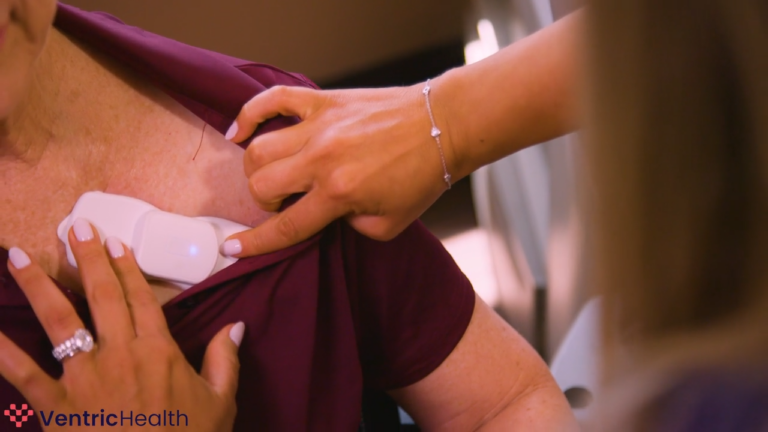
Demo: Proper Placement of the Vivio Test
This video offers a step-by-step guide for healthcare professionals for placing and positioning the Vivio test on a patient.
Rapid Combination Therapy for HFpEF Improves Early Outcomes
New evidence supports rapidly initiating combination therapy for heart failure with preserved ejection fraction (HFpEF). Starting SGLT inhibitors, finerenone, and GLP-1 receptor agonists early may deliver faster and additive benefits, reducing cardiovascular death or hospitalization while improving patient symptoms and quality of life.
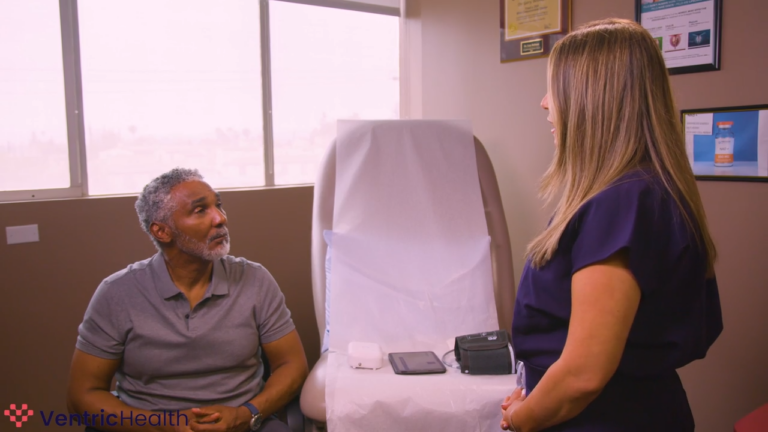
Demo: How to Introduce the Vivio Test to a Patient
Designed for healthcare professionals, this short video demonstrates how to introduce the Vivio test to patients in a clinical setting, as well as proper placement technique.